

Design in the world of AI
Where human designers actually work in an automated workflow
Jun 9, 2026 · AI & Process · 5 min
Aeryk Payne — Co-founder & Head of Design
This past month we refactored the UX and entirely redesigned the interface for communication on an enterprise saas platform. We did all this in less than a week’s worth of time. A year ago, that would’ve taken well over a month.

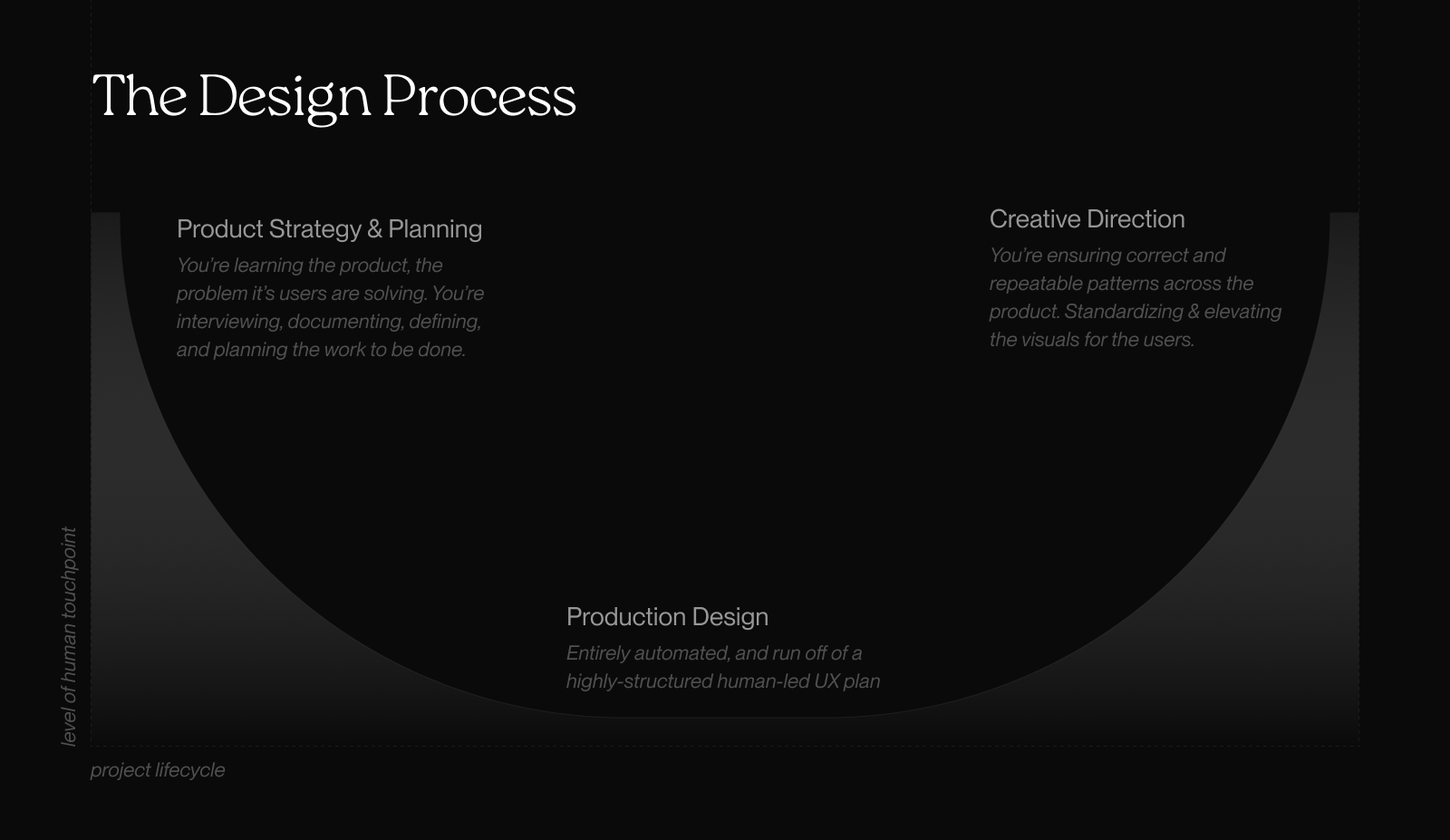
What I keep thinking about is the shape of the work, and how drastically that’s changing. Where human input still matters, where it doesn't, and where it shows up again. And also, how this impacts agencies who do this kind of work every day. Here’s the visual that’s been stuck in my head for a while now.
The first wall is product strategy. This is very personal, and someone will need to own this knowledge. You’re interviewing, documenting, and planning the work to be done. You’re learning the product, and how it works. You're defining the problem, and creating your plan to solve it.
The flat of the half-pipe is production design work. What a typical mid-level designer used to do is now handled entirely agentically. We've gotten to the place where with Claude Code and Figma’s MCP (provided there's proper planning and documentation) produces work that's clean, looks solid, and most importantly is easy to jump into and make changes.
The second wall is creative direction. Going in after the agent and applying the polish. Watching for wrong assumptions or invented functionality, and using your ✨ taste ✨ as a senior designer to make occasional tweaks to improve the overall aesthetics.
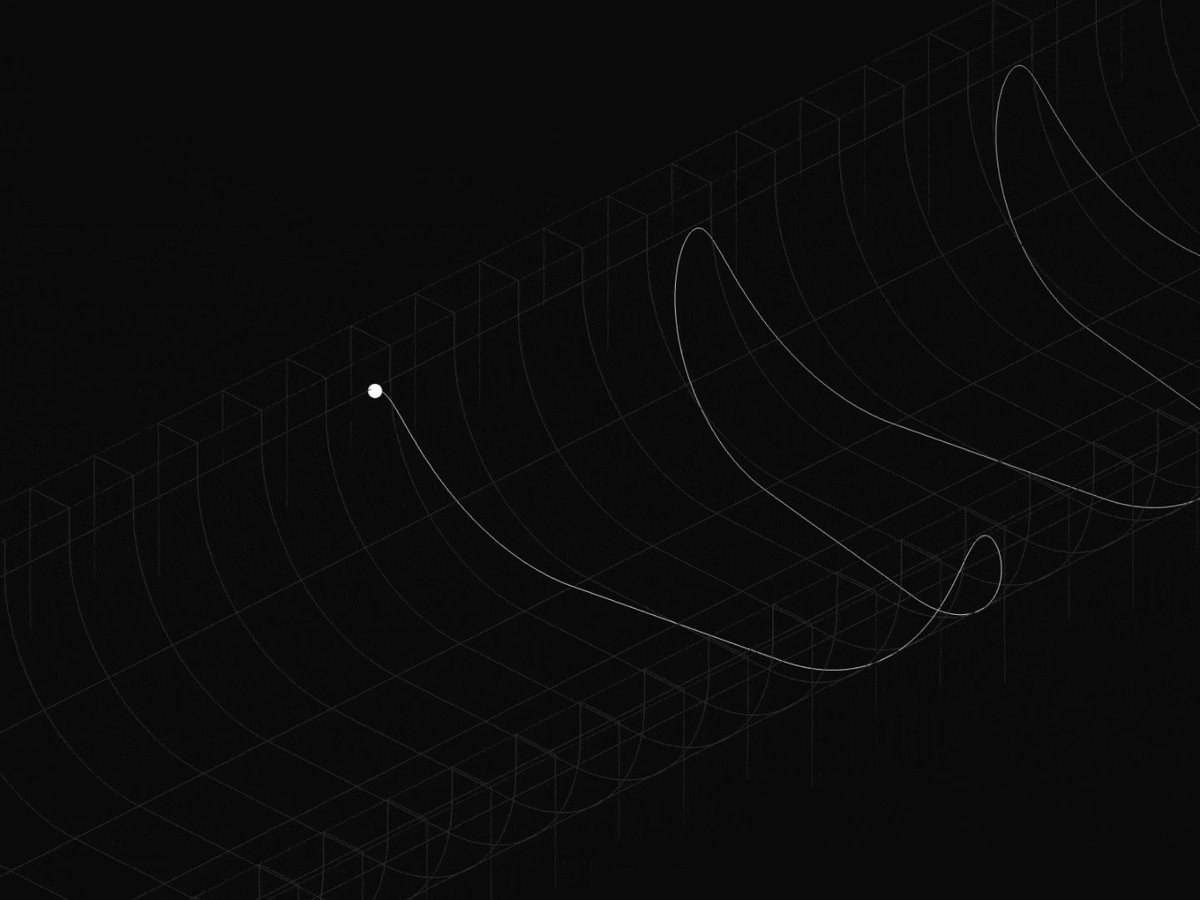
There’s a cyclical pattern to this, maybe more accurately, it looks something like this:
Here's our Approach in Practice
Here’s a peek at our workflow. This isn’t to say this is how everyone should work, but here’s what we’ve found works for us at Nicer.
After our interviews and meetings with stakeholders and product users, we start by having Claude review the Granola meeting notes, looking at the current UI, and creating a UX plan. This part is highly collaborative. While it is using AI, there’s a lot of back-and-forth. You have to understand the product and its users in order for this plan to be truly valuable.
The output of this session looks like two working files. A design brief and a ux plan. Both went into Claude Code pointed at the Figma File. For this next step, it's worth noting we’re running this in a project that already has a Design Skills Rulebook (more on this later for those interested).
Since we’ve done the proper prep work, the output of this session should be a pretty solid first pass at creating the new UI. We have it lay out all the new screens with an annotation layer noting the functional changes it made compared to the original UI, with those assumptions called out to quickly review.
Here’s where the designer steps back in. We go in and review the output just like a CD would review a first pass of designs from a designer. You’re making sure the correct colors, styles, and components are being used, and being used consistently. You’re ensuring the design is using repeatable patterns across flows and elevating the overall visuals where needed. Depending on the screen’s complexity, this is maybe 30-45 minutes per screen of polish. Here’s where you need strong design fundamentals and knowledge of the product. But maybe most importantly, is just to care about the thing you’re building. Put yourself in the user's shoes and make something you’d enjoy using.
And that's the workflow. High touch, low touch, then high touch again. The half pipe workflow.
What I find interesting is that the value of solid design skills seems to be at a premium right now. The work at the top of the first wall is way more leveraged than it used to be. A well-documented plan can produce a working first pass in minutes, but it’s not a magic bullet. The legwork still has to be done to create that plan (understanding the product, its users, its objectives, and its pain points). If you don’t spend the time and energy to truly understand and document the underlying challenges, the AI has no target to aim for. It may occasionally hit, but more often you end up with something overly generic that doesn’t solve the actual problems your users face.
The challenge agencies are facing
One challenge this workflow has posed for us is how to price design in this new workflow. This workflow effectively kills the retainer model, under which so much product work has historically been done. The work that is needed in this process is highly technical. It takes a deep understanding of the product and of best practices. Basically, very senior or partner-level contributors.
Hourly billing, your standard retainer model, assumes the time at the bottom of the half-pipe is what you're selling (that’s where agencies are traditionally making their margins). Here’s a breakdown of what it would often look like historically:
You sell a 200/hr/month retainer at 150/hr. That’s $30,000 a month. Woohoo!
And it might be split something like this:
| Role | Rate | Hours | Agency Cost |
|---|---|---|---|
| Product Strategy | $250 | 20 | $5,000 |
| Designer | $100 | 160 | $16,000 |
| Design Lead | $250 | 20 | $5,000 |
Project Net: 30,000 - 21,000 = ~$9,000 in profit, right around the 30% profit margin most agencies shoot for.
But now, that same retainer probably looks more like this:
| Role | Rate | Hours | Agency Cost |
|---|---|---|---|
| Product Strategy | $250 | 80 | $20,000 |
| Designer | $100 | 0 | $0 |
| Design Lead | $250 | 80 | $20,000 |
So, more costly, but with an output that’s easily 4-5x what you used to get. However, scaling this is a challenge. Talent quickly becomes a bottleneck as leads find themselves in a contributing role. And while output is 4-5x higher, that doesn’t mean we can scale back hours proportionally. This workflow requires a deep knowledge of the product to work. That’s simply not possible on 20 hours a month. So we’re in this place where leads are actively contributing to retainers and doing incredible work, but can only really run 1-2 at a time.
It’s definitely making us rethink our growth strategy. The traditional team structure and retainer approach are making less and less sense, but that’s not to say this is an existential problem. I’ve been intentional about calling this a challenge, not a problem, because I believe there’s a ton of opportunity here with the right approach. It’s exciting to see AI enabling more and more people and companies to build precisely the tools they need, and we’re seeing a volume of creation we’ve never seen before. All of that makes me optimistic that this industry will continue to grow and that there will be agencies that thrive in this new environment, and I’m eager to see the creative approaches agencies take to acclimate to this new way of working.